(717) 898-4663
  Landisville, PA



Meaningful activities for dementia patients in care homes can do more than fill the day. They can support comfort, reduce stress, encourage connection, and make routines feel more familiar. At Oak Leaf Manor North in Landisville, PA, families often want to know what daily engagement really looks like for someone living with dementia. This article explains the kinds of activities that may help, why structure matters, and how calming activities for dementia patients, creative activities for dementia patients, and daily activities for dementia patients can work together in a supportive setting.
The Alzheimer’s Association estimates that 7.2 million Americans age 65 and older are living with Alzheimer’s in 2025, which is one reason families are paying closer attention to daily routines and meaningful engagement. (Alzheimer’s Association Facts & Figures)
Why Activities Matter in Dementia Care
The best activities for dementia patients in care homes are not only entertaining. They can help people feel calmer, more included, and more connected to what is happening around them.
The NHS explains that even in later stages of dementia, activities can still be meaningful when they are simplified and built around the senses, such as sight, hearing, touch, taste, and smell. (NHS Dementia Activities Guide)
That is why families often search for ideas like 101 things to do with dementia patients, simple activities for dementia patients, or even free printable activities for dementia patients. Usually, what they really want is not a huge list; they want activities that feel manageable, familiar, and worthwhile.
A Simple Way to Think About Activity Types
Not every activity serves the same purpose. Some help with calm. Others encourage creativity, movement, or social connection. This quick comparison can make activities for dementia patients in care homes easier to plan.
| Activity type | Main purpose | Examples in daily life |
| Calming activities for dementia patients | Reduce anxiety and overstimulation | Soft music, quiet conversation, familiar movies |
| Creative activities for dementia patients | Encourage expression and participation | Art classes, simple crafts, storytelling |
| Daily activities for dementia patients | Support routine and familiarity | Dining routines, light movement, predictable group time |
| Social activities | Encourage connection and reduce isolation | Game nights, movie nights, group gatherings |
This is often more helpful than relying only on broad lists like 101 Things to do with dementia patients pdf or collections of free dementia activity packs.
What Makes an Activity More Successful?
When choosing activities for dementia patients in care homes, success usually comes from simplicity, not complexity. Activities tend to work better when they match the person’s energy level, past interests, and comfort with groups.
Families who look for simple activities for dementia patients are often on the right track. The goal is not to keep someone constantly busy; it is to create moments that feel comfortable, predictable, and engaging.
How Daily Routines Support Better Engagement
Routine matters because dementia can make the day feel confusing. When daily activities for dementia patients happen in a familiar rhythm, people often feel more secure.
At Oak Leaf Manor North, that rhythm connects directly to daily life. The community offers Memory Care and Personal Care, supported by activity rooms and social areas, dining, medication assistance, housekeeping services, laundry services, and on-site transportation.
Residents may engage in art classes, fitness classes, game nights, movie nights, religious services, and outings to local Landisville attractions, including museums and restaurants. These experiences help bring structure and familiarity into each day.
Families can explore how support is organized on the Levels of Care page and see more of the environment through the Amenities page.
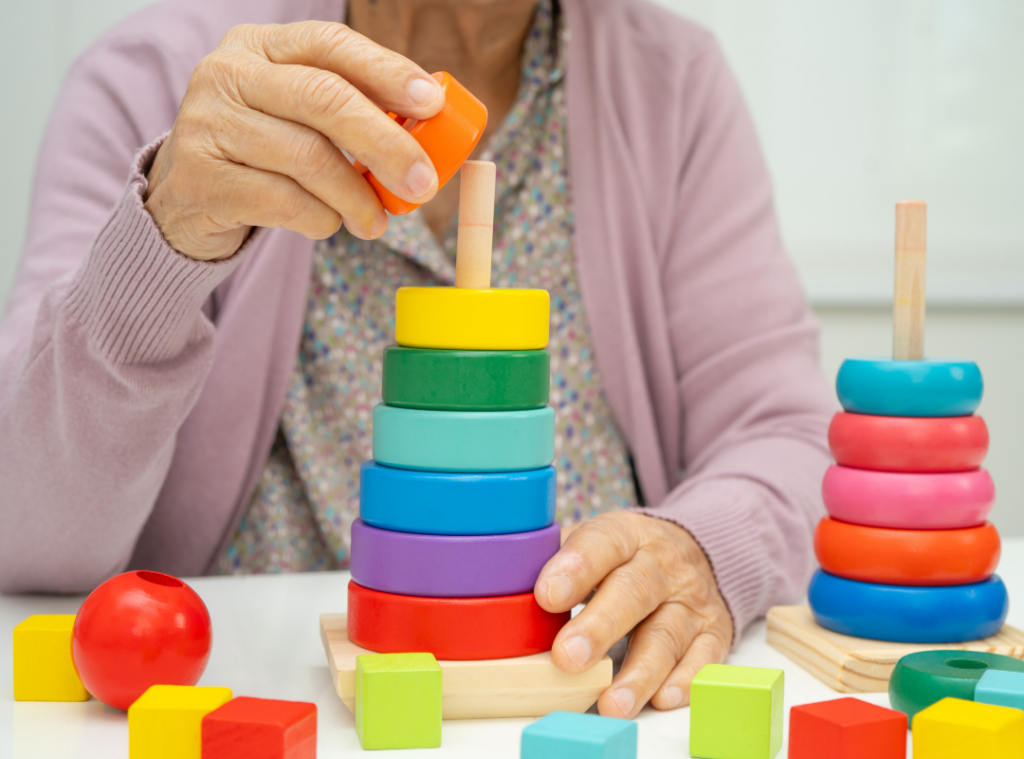
Matching Activities to Mood and Need
Different times of day may call for different approaches. When someone feels overwhelmed, calming activities for dementia patients can help reduce stress. When they are more alert, creative activities for dementia patients may feel more natural and enjoyable.
Lists like 101 things to do with dementia patients can be helpful starting points, but they work best when tailored to the individual. This is also why some families explore free printable activities for dementia patients or free dementia activity packs, then adjust them to fit comfort levels.
Why the Environment Matters as Much as the Activity
The environment can shape how well activities for dementia patients in care homes actually work. Noise levels, familiarity, and staff support all influence engagement.
The NHS also notes that maintaining enjoyable routines, social interaction, and physical activity may help reduce changes in behavior that can feel challenging. (NHS Dementia Behavior Support)
A setting that combines structure, encouragement, and consistency can make even simple activities more meaningful.
See How Dementia Activities Fit Into Daily Life
If you are exploring activities for dementia patients in care homes, seeing how they are part of everyday life can make a big difference. A visit can help you understand how routines, engagement, and support come together in a real setting.
When you feel ready, you can contact us, schedule a tour, or call us at 717-898-4663 to learn more about Oak Leaf Manor North in Landisville, PA, and how daily activities support comfort and connection.
Frequently Asked Questions
What are some fun activities for dementia patients?
Fun activities often include music, art, simple games, and shared movies. These experiences help create enjoyment without adding confusion. Group activities can work well when they are easy to follow. Many families find that creative activities for dementia patients are especially effective. Comfort and familiarity often matter more than complexity.
What stage of dementia needs 24 hour care?
24-hour care is often needed in later stages when safety and daily functioning become more difficult. Individuals may need consistent supervision and help with routines. Each situation is different, so timing can vary. The focus is usually on maintaining comfort and safety. Structured environments often become more important at this stage.
What are the four main types of activities for dementia patients?
The four main types include calming, creative, daily routine, and social activities. Each supports a different aspect of well-being. Calming activities for dementia patients help reduce anxiety, while daily routines provide structure. Creative and social activities encourage engagement and connection. A balanced mix tends to work best.
How to calm a dementia patient at night?
Creating a quiet, familiar environment can help reduce nighttime stress. Soft lighting and calming routines are often effective. Gentle reassurance and a calm tone also make a difference. Including calming activities for dementia patients earlier in the day may improve sleep. Consistency is key to helping evenings feel more settled.
My father has been living at Oak Leaf Manor North for a little over 5 1/2 years and we still can’t believe our good fortune to have found this amazing “home” for him. The entire staff go out of their way to make him feel special.
Cindy Zimmerman